In short
If a water pipe freezes in your Michigan home, turn off the water at the main shut-off valve. Keep the affected faucet open, and wrap an accessible frozen pipe in towels soaked in hot water. Keep electrical devices away from frozen or leaking pipes. If you turn on your faucets and nothing comes out, or the pipe does not thaw, call a licensed plumber.
Where pipes are more likely to freeze
Water expands as it freezes. That expansion puts pressure on the pipe containing it and can cause the pipe to break. Pipes exposed to cold include:
- Outdoor water lines, including hose bibs and sprinkler lines.
- Water supply pipes in unheated spaces, such as basements, crawl spaces, attics, garages, and kitchen cabinets.
- Pipes against exterior walls with little or no insulation.
Swimming pool supply lines are another outdoor example. Both plastic (PVC) and copper pipes can burst when water freezes inside them.
Ways to help prevent frozen pipes
Before and during cold weather, these measures can help protect exposed plumbing:
- Insulate pipes in crawl spaces and attics.
- Seal openings that let cold air in near pipes, including gaps around wiring and dryer vents.
- Let cold water drip from a faucet served by exposed pipes when it is very cold outside.
- Keep garage doors closed if water supply lines run through the garage.
- When you are away, set the thermostat no lower than 55 degrees.
- Open kitchen and bathroom cabinet doors so warmer air can circulate around the plumbing. Move harmful cleaners and household chemicals out of children's reach.
- Disconnect garden hoses. If practical, use an indoor valve to shut off and drain the pipes leading to outside faucets.
Keep the thermostat at the same temperature during the day and at night. If you are away, ask a friend or neighbor to check the house daily to make sure it is warm enough to prevent freezing. Heat tape or thermostatically-controlled heat cables can be used to wrap pipes; use products approved by an independent testing organization for their intended interior or exterior use, and follow the manufacturer's installation and operating instructions.
What to check when a faucet slows to a trickle
A faucet that produces only a trickle may indicate a frozen pipe. The guidance for checking and responding depends on what you find:
- Look for a frozen section against an exterior wall or where the water service enters through the foundation.
- If you detect that a water pipe has frozen, turn off the water at the main shut-off valve.
- Keep the affected faucet open while treating the frozen pipe. Water will begin to flow as the frozen area melts.
Do not use electrical appliances in an area of standing water.
How to thaw an accessible pipe safely
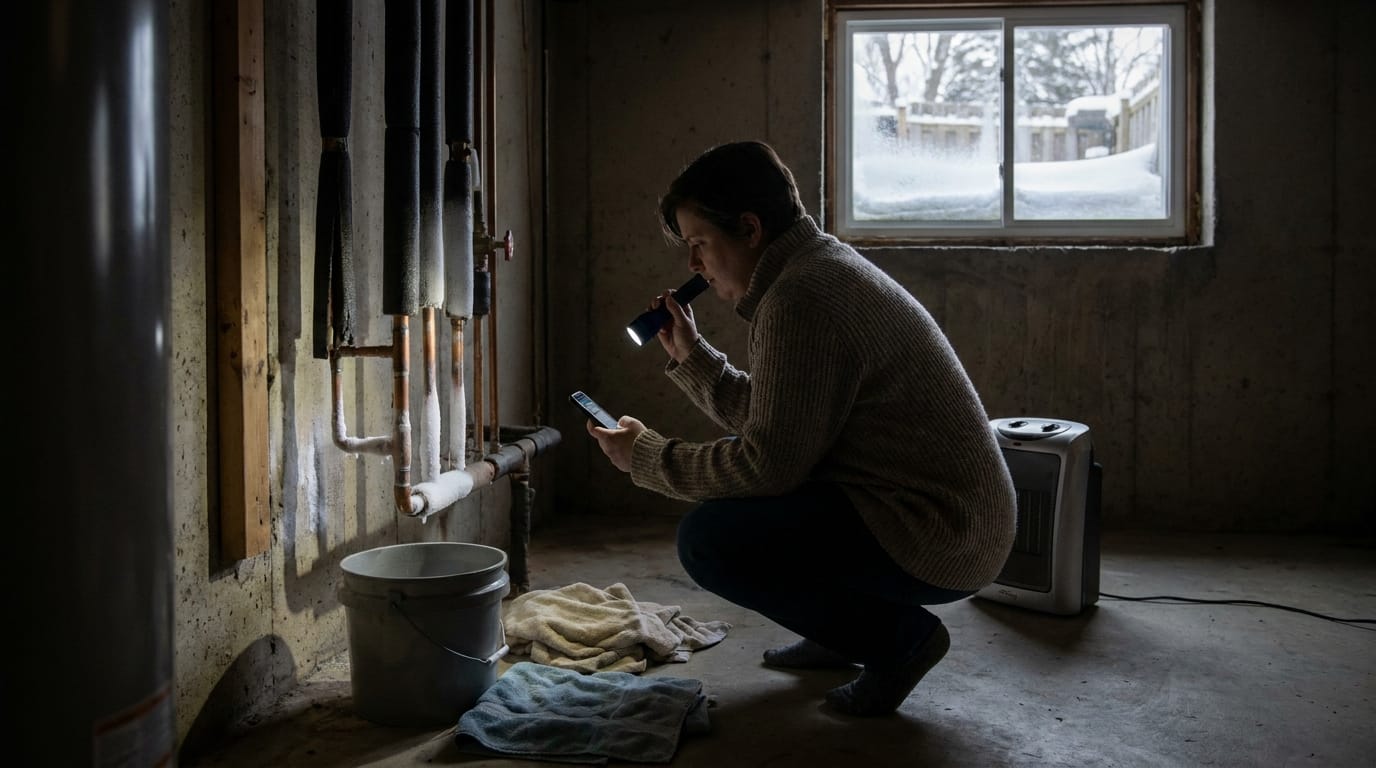
If you can reach the frozen section, wrap it with towels soaked in hot water and keep the faucet open. As the frozen area melts, water will begin to flow, and running water helps melt ice in the pipe. Keep checking the other faucets for additional frozen pipes.
Keep hair dryers, heating pads, space heaters, and other electrical devices away from a frozen or leaking pipe, because thawing ice can leave water near a plug or cord. Never use a blowtorch, kerosene or propane heater, charcoal stove, or another open-flame device. If hot towels do not thaw the pipe, call a licensed plumber.
When to call a licensed plumber
Call a licensed plumber if you cannot thaw the pipe. Call one as well if you cannot find or reach the frozen area, or if you turn on a faucet and nothing comes out. For a burst or broken pipe, close the shutoff valve and call a licensed plumber immediately. The shutoff valve is where the water line enters the home or building, often near the water meter.
Michigan also has permit rules for plumbing work: work that requires a permit must not start until the appropriate enforcing agency issues one. A permit is not required for repairs involving only the working parts of a faucet or valve, or for clearing a stoppage, provided the existing piping or fixtures are not altered. A plumbing permit applicant must be a licensed plumbing contractor or a homeowner installing their own plumbing, building sewer, or private sewer. If you are considering a pipe repair, ask about the permit requirements for that work.
How we can help
We offer plumbing services and have emergency coverage at all times. If you need help with a frozen pipe, call Rock Plumbing Pros to ask about availability.
A separate example of our plumbing work involved a client's kitchen drain that clogged on a Saturday. Their own efforts had not cleared it. We sent a technician the same day, and the clog was fixed that day, so the client did not have to miss work for a Monday repair.
What customers are saying
"The leaking pipe replacement work Andrew and Brandon did at my home was both fast and efficient, for which am very grateful. A very professionally done job!"
Jorge Chinea, Google review
Frequently asked questions
What if I cannot find or reach the frozen pipe?
Call a licensed plumber if you cannot locate the frozen area or cannot access it. Check the other faucets in your home as well to find out whether additional pipes have frozen.
What is the safest way to thaw a frozen pipe myself?
Keep the faucet open and wrap the frozen section in towels soaked in hot water. Keep electrical devices such as hair dryers and heating pads away from the pipe, and never use an open flame. If the pipe does not thaw, call a licensed plumber.
Do I need a permit or license to repair a frozen or burst pipe in Michigan?
Permit requirements depend on the work. A permit is not required for repairs involving only the working parts of a faucet or valve, or for clearing a stoppage without altering existing piping or fixtures. A licensed plumbing contractor or a homeowner installing their own plumbing may obtain a plumbing permit.
Sources
- Preventing Frozen Pipes. State of Michigan.
- Preventing & Thawing Frozen Pipes | American Red Cross. American Red Cross.
- Cold Weather Advisory & Pipe Safety Reminder - City of Muskegon. City of Muskegon, 2026.
- Plumbing Permit Information. Michigan Department of Licensing and Regulatory Affairs.